How Energy-Efficient Laundry Systems Reduce Long-Term Operating Costs
Every laundry cycle uses water, chemistry, heat, electricity and staff time. Energy efficient commercial laundry equipment reduces these inputs through load weighing, stronger extraction, moisture sensing and dryer airflow design. Over 30,000 cycles, small savings per load become serious operating cost reductions. When production volume, utilities and textile type are measured with Econic Laundry Solutions, the equipment choice is based on lifetime running cost.
A washer running 8 cycles per day for 10 years does not only carry a purchase price. It carries water, detergent, hot water, extraction, drying and labour costs through every cycle. When you compare energy efficient commercial laundry equipment, the real question is what each load costs to process from wash to dry, fold and store.
Washers, Load Weighing and Chemical Use
A washer with efficient dosing weighs the load and adjusts water and chemistry to suit the actual weight in the drum. Underloading is common in OPL environments, especially where staff are separating linen types or resident clothing. If the washer doses for a full load every time, chemistry and rinse water are wasted.
Econic’s WH6-27 example shows how this adds up. At $2.40 per cycle for chemicals over 30,000 cycles, the lifetime chemical cost is $72,000. A 20% saving equals $14,400, while a 30% saving equals $21,600.
Key savings come from:
- Load weighing that adjusts detergent to the actual kg in the drum.
- Better rinsing because the chemical dosage is controlled.
- Less overfoaming, which reduces cleaning and maintenance issues.
- Lower textile damage from excessive chemistry.
Dryer Energy, Extraction and Airflow
Water left in linen after washing has to be removed in the dryer, so extraction force directly affects dryer energy. Soft mount washers extracting at higher G-force remove more moisture before the load reaches the dryer, reducing dry times and energy use.
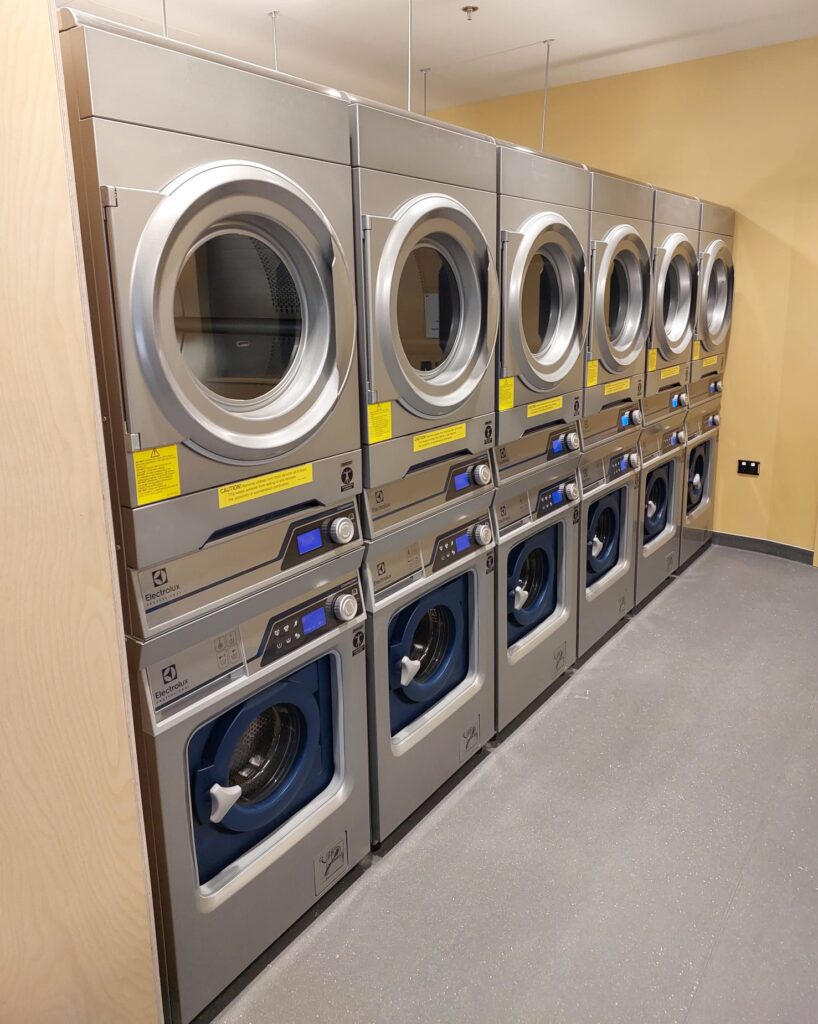
Dryer design then determines how efficiently heat removes the remaining moisture. Axial airflow pushes heat through the drum from back to front, with an air seal reducing the skirting of hot air around the drum. Moisture Balance measures retained moisture and stops the cycle at the programmed moisture level. Reversing drums redistribute wet areas, reducing dry times by around 7 minutes per cycle in Econic’s Electrolux Professional dryer range.
Hot Water, Heat Pumps and Lifetime Cost
Hot water is still needed for effective cleaning in on-premise and central laundries. Cold water washing pushes the burden onto chemistry, which increases dosing and accelerates textile degradation. The Energy Efficiency and Conservation Authority (EECA) notes that more energy-efficient products reduce running costs for households and businesses, which is exactly why thermal cost matters across a machine’s full life.
Where hot water cost is a concern, heat pump hot water systems reduce thermal cost by 60%. Heat pump dryers also reduce energy usage and remove ducting requirements in many shared living environments.
Labour, Automation and Production Output
Labour is the biggest cost in laundries operated in New Zealand, around 75% of total cost in Econic’s flatwork ironer guidance. Automation therefore belongs in the energy discussion because fewer manual handling steps reduce hours per kg processed.
A towel folder operating at around 600 towels per hour changes the labour equation once towel volumes pass 100 pieces per hour. An ironer with automatic feeding reduces staffing at the machine, while folding / stacking systems reduce handling after ironing and improves consistency. Energy savings matter, however labour savings normally drive the strongest long-term return.
Discuss energy efficient commercial laundry equipment with Econic Laundry Solutions and discover how lower utility consumption can deliver long-term savings across your operation.
For businesses reviewing their current laundry operation, Econic Laundry Solutions provides solutions for both on-premise laundries and larger central laundries. Explore ELS NZ’s range of commercial washers, dryers, flatwork ironers and towel folders to compare equipment that can help improve energy efficiency, workflow and long-term operating performance.
Choosing the right equipment requires looking beyond the initial purchase price to understand capacity, utilities, labour requirements and lifetime running costs. Explore the full range of commercial laundry products or learn more about ELS NZ’s parts and service support. If you are planning a new laundry, upgrading an existing operation or looking to reduce operating costs, contact Econic Laundry Solutions to discuss the requirements of your facility.
Frequently Asked Questions
1. How do energy efficient laundry systems reduce operating costs?
Energy efficient laundry systems reduce operating costs by using less water, electricity, gas and chemicals per load. Technologies such as automatic load weighing, controlled chemical dosing, high-speed extraction and moisture sensing can also shorten wash and drying cycles. Over thousands of cycles, these individual savings can significantly lower the lifetime cost of operating a commercial laundry.
2. How does commercial laundry equipment save energy?
Commercial laundry equipment saves energy through features such as high-speed extraction, efficient airflow, moisture sensing and heat pump technology. Removing more water during the wash cycle means less moisture needs to be removed in the dryer, reducing electricity or gas consumption per load.
3. What is the most energy efficient commercial laundry equipment?
The most energy efficient commercial laundry equipment depends on the type of textiles being processed, load size, number of cycles per day and available utilities. Features such as load weighing, efficient chemical dosing, high G-force extraction, moisture-controlled drying and heat pump technology can all contribute to lower energy consumption.
4. Do energy efficient laundry systems reduce labour costs?
Yes. Energy efficient laundry systems can reduce labour costs when equipment and automation remove unnecessary manual handling. Towel folders, automatic feeders, ironers and stacking systems can increase the amount of laundry processed per staff hour and improve workflow consistency.
5. Does energy efficient commercial laundry equipment reduce water usage?
Yes. Features such as automatic load weighing, controlled dosing and optimised rinse cycles can reduce water consumption without compromising wash quality. When multiplied across thousands of commercial laundry cycles, lower water use can contribute to substantial long-term operating savings.
6. How can high-speed extraction reduce commercial laundry drying costs?
High-speed extraction removes more water from textiles before they enter the dryer. With less retained moisture, dryers require less time and energy to complete each load. This can reduce energy costs while also improving laundry throughput during busy operating periods.
7. Are heat pump dryers more energy efficient for commercial laundries?
Heat pump dryers can provide substantial energy savings by recovering and reusing heat rather than continually exhausting heated air. They can be particularly useful in environments where reducing electricity consumption and avoiding conventional external ducting are important considerations.
8. Is energy efficient laundry equipment worth the higher initial investment?
Energy efficient laundry equipment should be assessed according to its total lifetime operating cost rather than purchase price alone. Lower water, energy, chemical and labour requirements can produce savings over thousands of cycles. The best return depends on laundry volume, textile type, utility costs and equipment utilisation.