Energy-Efficient Commercial Laundry Equipment: How to Reduce Water and Power Costs
Rising utility costs are one of the biggest challenges facing hotels, laundromats, aged care facilities, hospitals, student accommodation providers, and commercial laundry operators. Water and electricity consumption can significantly impact profitability, particularly in businesses where laundry operations run continuously throughout the day.
Investing in an energy efficient commercial washer and modern commercial laundry equipment is one of the most effective ways to reduce operational expenses while supporting sustainability goals. Today’s water saving laundry machines use advanced technologies to minimise water, electricity, detergent, and labour costs without compromising cleaning performance.
For businesses across New Zealand, improving laundry efficiency is no longer just an environmental initiative. It has become a critical business strategy that can deliver measurable savings and long-term return on investment.
This guide explains how modern commercial laundry equipment helps reduce water and power costs, the technologies that make the biggest difference, and how ELS NZ can help businesses optimise their laundry operations.
Why Utility Costs Matter in Commercial Laundry
Laundry operations are among the most resource-intensive activities within many businesses.
Commercial washers and dryers consume:
- Large volumes of water
- Significant amounts of electricity
- Heating energy
- Detergents and chemicals
For organisations processing hundreds or thousands of kilograms of laundry each week, even small efficiency improvements can result in substantial annual savings.
Examples include:
- Hotels washing linen and towels daily
- Hospitals processing patient bedding and uniforms
- Aged care facilities managing continuous laundry loads
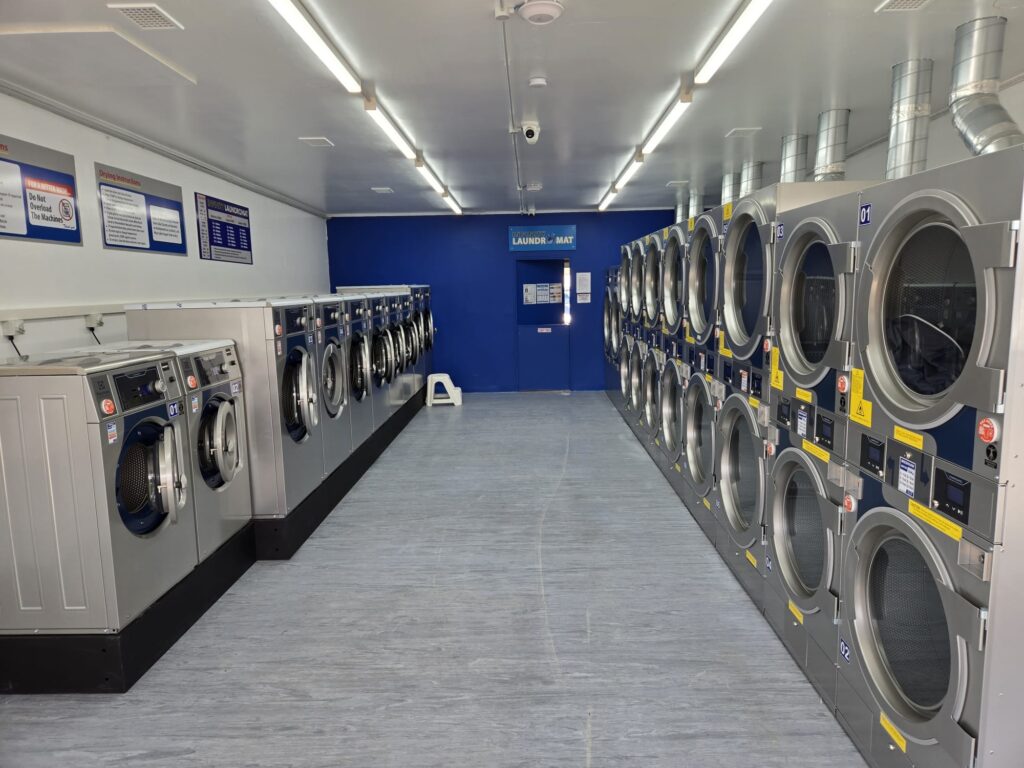
- Laundromats operating multiple machines throughout the day
Reducing utility consumption directly improves profitability.
What Is Energy-Efficient Commercial Laundry Equipment?
Energy-efficient commercial laundry equipment is designed to reduce resource consumption while maintaining or improving cleaning performance.
Modern equipment focuses on:
- Lower water usage
- Reduced electricity consumption
- Faster processing times
- Smart automation
- Lower chemical consumption
These improvements help businesses achieve both financial and environmental objectives.
The Benefits of an Energy Efficient Commercial Washer
An energy efficient commercial washer can significantly reduce operating costs over the lifespan of the machine.
Lower Water Consumption
Traditional washing machines often use excessive water regardless of load size.
Modern machines utilise:
- Load sensing technology
- Intelligent water management systems
- Programmable wash cycles
This ensures that only the necessary amount of water is used for each load.
Reduced Energy Usage
Efficient machines consume less electricity by optimising:
- Motor performance
- Water heating
- Cycle duration
- Spin speeds
Lower energy consumption leads directly to reduced utility bills.
Reduced Chemical Costs
Advanced programming ensures precise chemical dosing.
Benefits include:
- Less detergent waste
- Improved cleaning consistency
- Lower operating expenses
Faster Throughput
Modern machines complete cycles more efficiently, allowing businesses to process more laundry in less time.
This improves productivity while reducing labour requirements.
How Water Saving Laundry Machines Work
Water saving laundry machines incorporate several technologies designed to minimise water usage.
Load Detection Technology
The machine automatically measures load size and adjusts water levels accordingly.
Benefits include:
- Reduced water waste
- Lower utility costs
- Improved sustainability
Optimised Wash Cycles
Modern software adjusts wash cycles based on:
- Fabric type
- Soil level
- Load weight
This ensures optimal cleaning with minimal resource consumption.
Efficient Drum Design
Improved drum engineering enhances:
- Water circulation
- Mechanical action
- Cleaning effectiveness
This allows less water to achieve superior cleaning results.
High G-Force Extraction: The Hidden Cost Saver
One of the most overlooked features in commercial washers is extraction speed.
High-performance machines often offer:
- 350G extraction = 55% retained moisture
- 400G extraction = 50% retained moisture
- 450G extraction = 45% retained moisture
Higher extraction removes more moisture before drying.
Benefits Include
- Shorter dryer cycles
- Lower electricity usage
- Faster turnaround times
- Increased machine throughput
Reducing dryer run times often produces some of the largest energy savings in commercial laundry operations.
Choosing Energy-Efficient Dryers
Washers are only part of the equation.
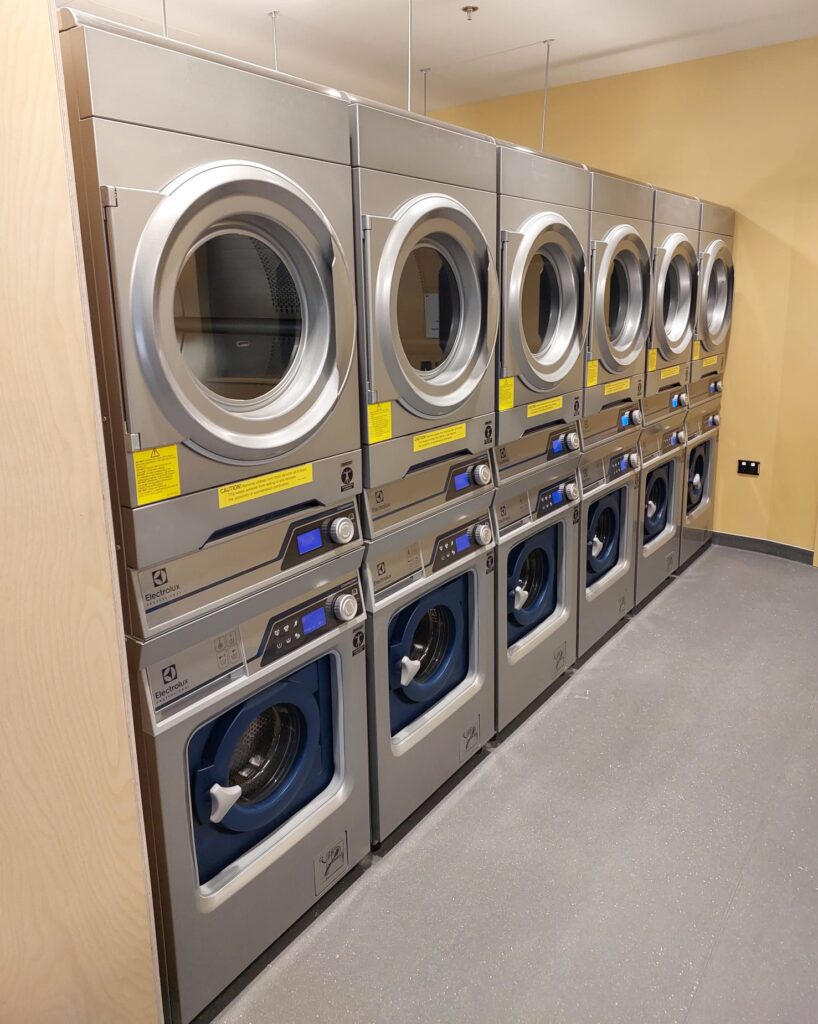
Commercial dryers can account for a significant portion of energy consumption.
Look for:
Axial Airflow Technology
Improves airflow efficiency and reduces drying times.
Moisture Sensing Controls
Automatically stop drying when laundry reaches the desired moisture level.
Benefits include:
- Reduced electricity consumption
- Less fabric wear
- Improved efficiency
Heat Recovery Systems
Some advanced systems recover heat from exhaust air and reuse it during the drying process.
Smart Laundry Technology
Modern commercial laundry equipment increasingly incorporates smart technology.
Remote Monitoring
Managers can monitor:
- Machine performance
- Utility consumption
- Maintenance requirements
- Error notifications
Usage Reporting
Detailed reporting provides insights into:
- Water usage
- Energy consumption
- Equipment utilisation
- Operational efficiency
Predictive Maintenance
Smart systems identify potential issues before they become costly breakdowns.
This reduces downtime and maintenance expenses.
Sustainability Benefits for Businesses
Sustainability is becoming increasingly important for customers, investors, and regulators.
Investing in efficient laundry equipment can support:
Environmental Goals
Businesses can reduce:
- Water consumption
- Carbon emissions
- Energy usage
- Chemical waste
Corporate Responsibility Initiatives
Demonstrating sustainable practices can strengthen brand reputation.
Compliance Requirements
Many industries are introducing stricter environmental standards.
Efficient equipment helps businesses stay ahead of future regulations.
Industry-Specific Benefits
Hotels
Hotels process large quantities of:
- Towels
- Bedding
- Linen
Energy-efficient systems reduce operating costs while maintaining guest expectations.
Aged Care Facilities
Consistent hygiene standards are essential.
Modern commercial laundry equipment improves:
- Cleaning performance
- Operational efficiency
- Infection control
Hospitals
Healthcare environments demand:
- Reliable performance
- Hygienic processing
- Resource efficiency
Advanced equipment supports all three objectives.
Laundromats
Utility costs directly impact profitability.
Reducing water and energy usage improves margins while attracting environmentally conscious customers.
Calculating Return on Investment
Many businesses focus solely on purchase price.
However, the true value of equipment should be measured through:
Utility Savings
Reduced:
- Water bills
- Electricity bills
- Gas consumption
Labour Savings
Faster cycles improve productivity.
Maintenance Savings
Reliable equipment reduces repair costs and downtime.
Equipment Lifespan
Commercial-grade equipment often delivers many years of service.
When these savings are combined, premium equipment frequently delivers superior long-term value.
Why ELS NZ Recommends Energy-Efficient Solutions
ELS NZ works with businesses throughout New Zealand to design efficient laundry operations tailored to their specific requirements.
Their solutions focus on:
- Reducing operating costs
- Improving productivity
- Supporting sustainability goals
- Maximising return on investment
By supplying industry-leading equipment from trusted manufacturers, ELS NZ helps organisations achieve measurable savings while maintaining exceptional laundry performance.
Future Trends in Commercial Laundry Efficiency
The commercial laundry industry continues to evolve.
Emerging technologies include:
- Artificial intelligence-driven optimisation
- Advanced water recycling systems
- Heat pump drying technology
- Smart utility monitoring
- Automated chemical dosing systems
Businesses investing in modern equipment today position themselves to take advantage of future innovations.
Reducing water and power costs is no longer optional for many businesses. Rising utility expenses make efficiency a key driver of profitability and long-term sustainability.
Investing in an energy efficient commercial washer, modern water saving laundry machines, and advanced commercial laundry equipment can significantly reduce operating expenses while improving productivity and environmental performance.
ELS NZ specialises in helping businesses identify the most efficient laundry solutions for their specific needs. Whether you operate a hotel, laundromat, healthcare facility, aged care centre, or student accommodation, their team can help you design a cost-effective laundry system that delivers measurable results.
To learn more, visit the ELS NZ Contact Page and speak with a commercial laundry specialist today.
Frequently Asked Questions
1. What is an energy efficient commercial washer?
An energy efficient commercial washer uses advanced technologies to reduce water, electricity, and detergent consumption while maintaining cleaning performance.
2. How much water can water saving laundry machines reduce?
Modern water-saving machines can reduce water usage by up to 30% or more compared to older commercial laundry equipment.
3. Are energy-efficient commercial washers worth the investment?
Yes. Lower utility bills, reduced maintenance costs, and improved productivity often result in strong long-term ROI.
4. Which industries benefit most from energy-efficient laundry equipment?
Hotels, hospitals, laundromats, aged care facilities, student accommodation providers, and commercial laundries benefit significantly.
5. What is high G-force extraction?
High G-force extraction removes more water during the spin cycle, reducing drying times and energy consumption.
6. Can commercial laundry equipment reduce electricity costs?
Yes. Modern washers and dryers use advanced technologies to minimise energy consumption while maintaining performance.
7. What features should I look for in water saving laundry machines?
Look for load sensing technology, programmable controls, efficient drum design, high extraction speeds, and smart monitoring capabilities.
8. Can ELS NZ help improve laundry efficiency?
Yes. ELS NZ provides commercial laundry equipment, system design, installation, and ongoing support to help businesses reduce operating costs.