
A lower energy figure means little if one dryer receives drier linen or leaves more moisture behind. For a useful comparison, each machine must complete the same drying task within your available hours. When selecting commercial dryers in NZ from Econic Laundry Solutions, your workload determines the performance required, while current and projected energy tariffs help establish whether the potential savings justify replacement.
Before replacing your dryers, establish how much of your drying bill comes from the machines themselves. Restricted airflow, excess moisture and unnecessary heating can all increase energy consumption.
In our feasibility assessments at Econic Laundry Solutions, we assess commercial dryers in NZ against the workload they must handle. The replacement case needs to distinguish savings from new equipment from those achievable by correcting how your existing laundry runs.
Airflow and the Water Entering Your Dryer
The water left after your washer’s final spin affects the energy needed for drying. Compare dryers using loads with the same starting moisture level, or you risk crediting one dryer for water already removed by the washer. Our article, Soft Mount vs Hard Mount Washers: Which Is Right for Your Laundry?, includes the effect of extraction on drying costs.
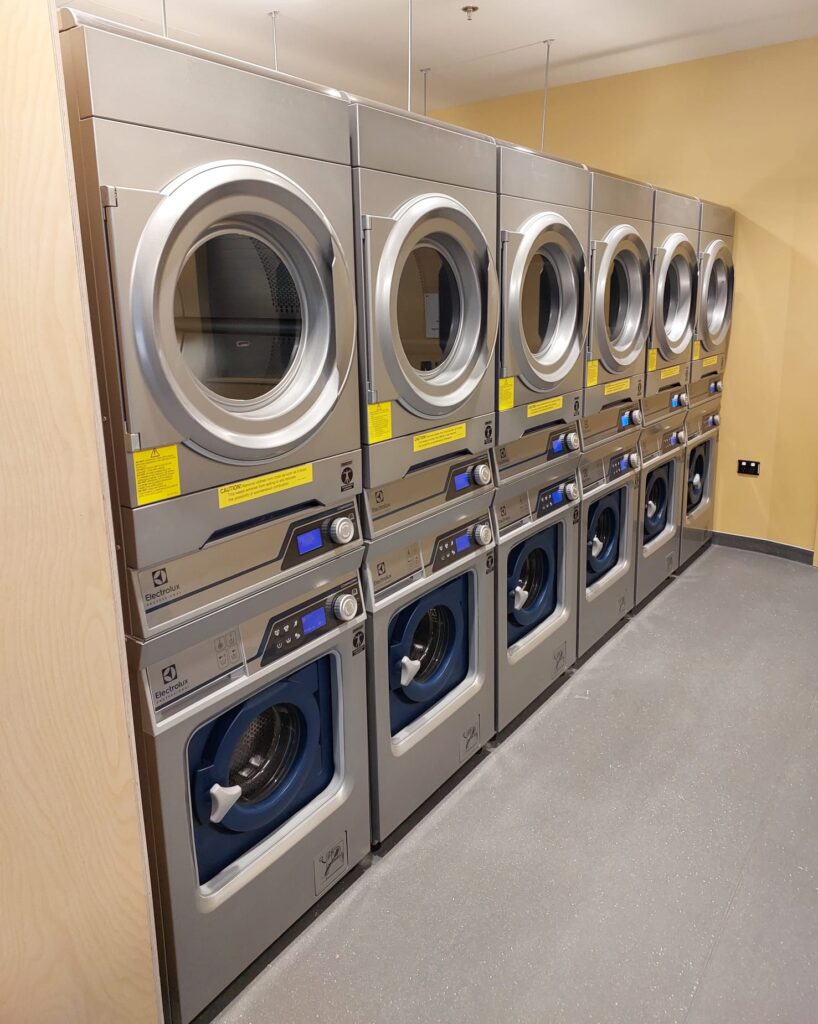
Effective axial airflow used in Electrolux Professional dryers moves heated air through a sealed basket and prevents skirting, to support efficient drying. Restrictive exhaust ducting or insufficient replacement air reduces that flow. If loads take too long to dry, check the ventilation against the manufacturer’s requirements before assuming you need a replacement dryer.
Stopping at the Required Moisture Level
A timed programme runs for the minutes selected, even if the load reaches the required dryness earlier. Any heating after that point uses energy unnecessarily.
Electrolux Professional’s Moisture Balance measures moisture during drying and stops at the selected level. Your towels need to be ready for use, while sheets going to an ironer need some moisture left in them. Drying those sheets fully uses energy to remove water needed for ironing.
Reversing Drum
Selecting a dryer with a reversing drum ensures large items don’t knot / ball, while redistributing the wet area to ensure even drying.
This feature can save 7 to 10 minutes in drying time, impacting energy costs over the 30’000 hour life of the dryer.
Sizing Commercial Dryers for Your NZ Laundry
Bulky loads need room to tumble, so equal washer and dryer kilogram ratings do not guarantee that the machines will work well together. Drying time also affects how many loads you can finish during your busiest hours. For larger facilities, central laundry solutions also need to account for production volumes and equipment capacity.
For a useful comparison, record:
- Energy used per kilogram for comparable loads.
- Moisture levels before and after drying.
- Loads completed during your busiest hours.
- Installation costs and expected annual operating hours.
Calculate running costs using your current tariffs, including any utility upgrades in the installation cost. Recalculate with higher energy prices to see how a tariff increase would affect the payback period.
Contact Econic Laundry Solutions today to explore energy-efficient commercial dryers in NZ and make an informed investment in your laundry’s future.
Frequently Asked Questions
1. Why do commercial dryer savings differ between laundries?
Your annual savings depend on how often you run the dryer and the energy used for each load. Washer extraction affects the water requiring evaporation. Your tariff determines what that energy costs, so a percentage saving alone does not establish a financial return.
2. Does moisture sensing replace timed drying?
On equipped models, moisture-controlled programmes stop at a selected moisture level. Timed programmes may remain available. We confirm the controls and programmes included with your specified machine.
3. Should your dryer have the same kilogram capacity as your washer?
Equal ratings do not establish a suitable pairing. Bulky textiles need tumbling space, and cycle times determine whether drying keeps pace with washing.