Ground-floor concrete and suspended slabs place different constraints on washer installation. Your choice of commercial washing machines in NZ also affects the building work required and the moisture passed to your dryers. When comparing hard mount and soft mount washers from Econic Laundry Solutions, installation requirements and daily utilisation help determine the true cost of ownership.
Replacing washers or fitting out a new laundry involves upfront installation costs and long-term operating expenses. When choosing a commercial washing machine in NZ, the mounting system needs to suit both your premises and your laundry’s daily workload.
Our Econic Laundry Solutions washer range includes hard mount options for suitable ground-floor sites and soft mount models with internal suspension for high extraction, so your building and daily workload determine the appropriate investment.
How Each Mounting System Handles Vibration
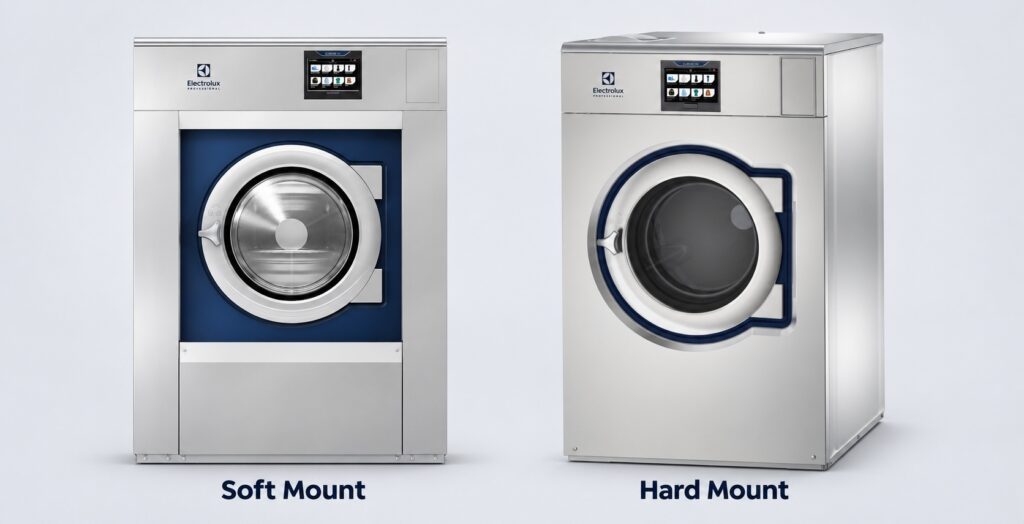
A hard mount washer has no internal suspension. During extraction, forces from the rotating load pass through the frame and anchor into its foundation. An unevenly distributed load produces changing forces, so the foundation must withstand dynamic loading alongside the machine’s operating weight.
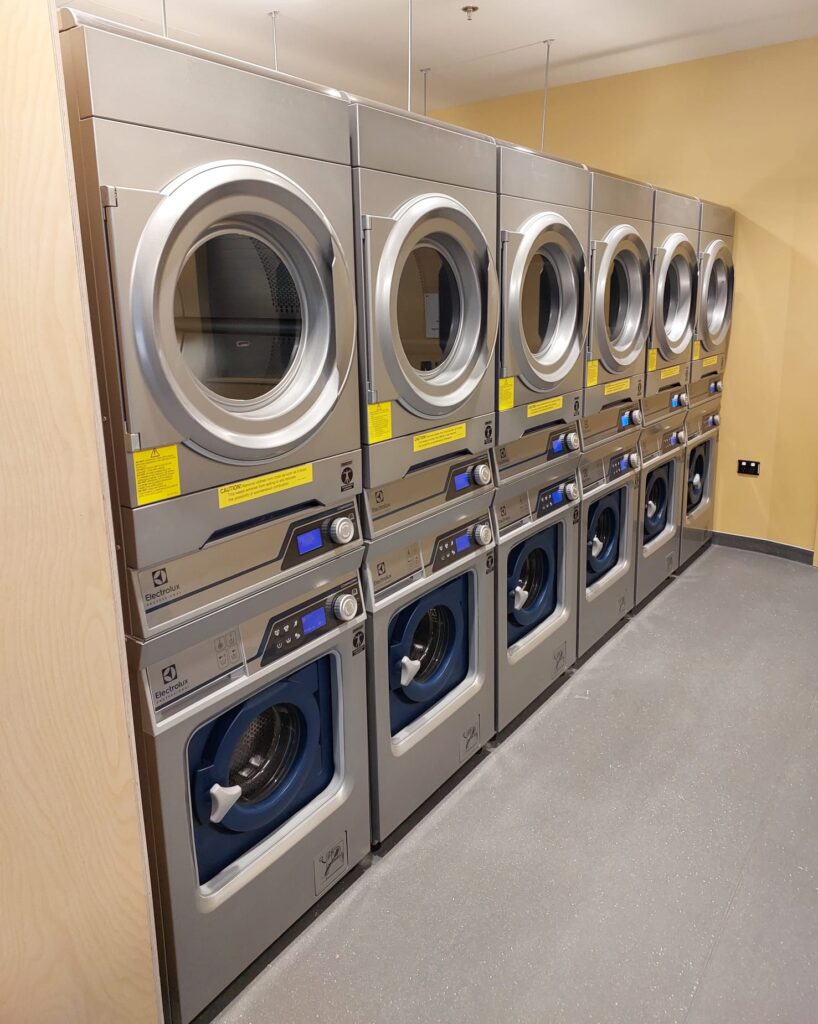
A soft mount washer supports its drum assembly on an internal suspension that reduces vibration transmitted to the floor. That suspension enables high-speed extraction, but does not remove structural loading. An engineer assessing a suspended slab needs the selected model’s operating loads and vibration data; the empty machine’s weight alone does not establish suitability.
Which Installation Suits Your Laundry Floor?
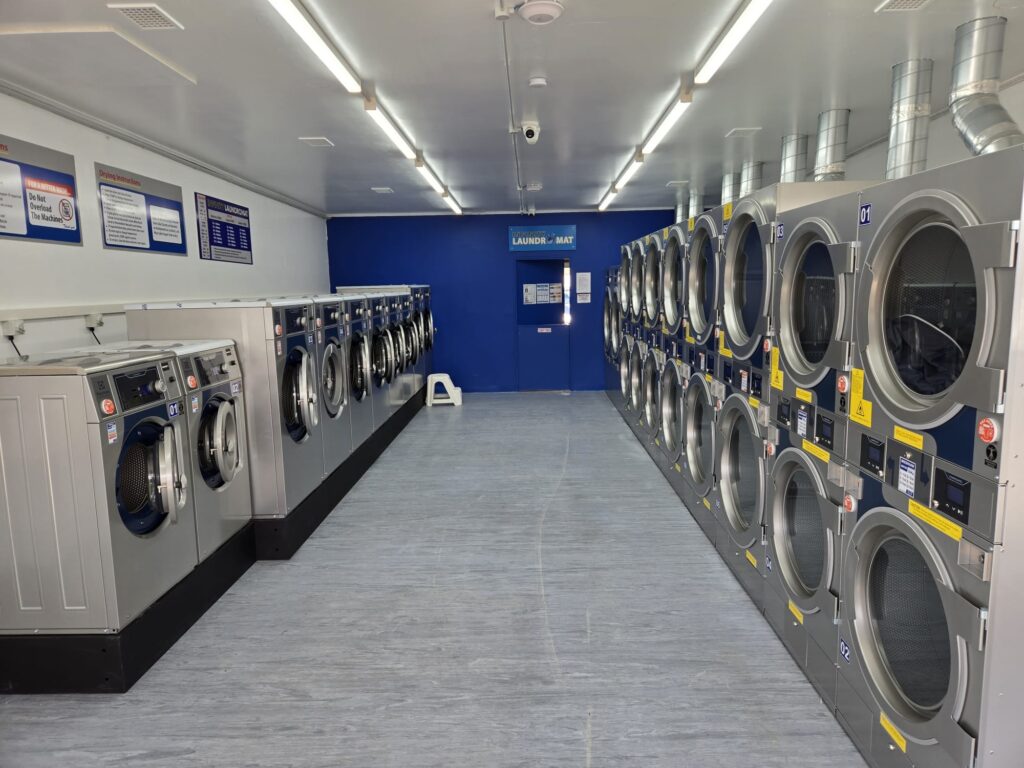
A ground-floor laundromat with a reinforced concrete foundation that meets the selected washer’s installation requirements may accommodate hard mount equipment without additional foundation work. Where the slab needs upgrading, include that work in the price comparison with soft mount equipment.
If your laundry sits above bedrooms or offices, vibration from the spin cycle can travel through the floor and cause noise in the rooms below. A structural engineer checks the floor’s capacity to support the operating machines. An acoustic engineer assesses the need for additional vibration isolation, such as resilient mounts or an isolated equipment base, compatible with the washer manufacturer’s installation requirements.
The installation specification needs to establish:
- The existing foundation’s construction and condition.
- The selected model’s static and dynamic loads.
- Any concrete works or strengthening, including anchoring requirements.
A raised plinth does not automatically correct an inadequate slab. Its connection to the supporting structure must meet the machine manufacturer’s installation requirements.
When Does Higher Extraction Justify the Investment?
Higher extraction removes water that your dryer would otherwise evaporate using heat. EECA, New Zealand’s Energy Efficiency and Conservation Authority, notes that giving laundry a good spin before drying removes excess moisture and uses far less energy than heating it in a dryer.
If your laundromat runs a few loads each day and already has a suitable foundation, the extra cost of a soft mount washer has fewer drying cycles over which to pay for itself. A hard mount machine could suit that workload without the additional investment.
An on-premise laundry processing towels throughout the day has more opportunities to recover the additional investment through reduced drying costs. Compare energy use for the same towel load at each washer’s permitted extraction setting, using your current energy tariff. Calculate annual savings from the number of loads you actually dry, and include any difference in installation costs when estimating payback.
The dryer’s airflow and controls also influence that calculation, as we examine in “Are Your Commercial Dryers Costing You More Than You Think?” [HYPERLINK WHEN UPLOADED]
Which Washer Mounting System Is Right for Your Facility?
Choosing between hard mount and soft mount washers starts with understanding your building, installation requirements and daily laundry volumes. Econic Laundry Solutions can help you compare the options and identify a suitable solution.
Speak to Econic Laundry Solutions about choosing a commercial washing machine for your NZ facility.
Frequently Asked Questions
1. Can a soft mount washer be installed on an upper floor?
Upper-floor installation of a soft mount washer depends on the supporting structure and the selected machine’s loading requirements. Internal suspension reduces transmitted vibration, but an engineer still needs to confirm the floor’s suitability.
2. Does a hard mount washer need a new concrete base?
A new concrete base is unnecessary if the existing foundation meets the selected hard mount washer’s installation requirements. Slab thickness and condition need checking alongside concrete strength and the specified anchoring arrangement.
3. Will higher extraction shorten drying time for every load?
A: Drying-time reductions from higher extraction depend on the fabric and permitted spin programme. Delicate items need restricted extraction, while absorbent towels offer greater scope for removing water mechanically. Dryer loading and airflow also affect the result.