
How To Maximise Output in a Small Commercial Laundry Space
Limited floor space does not automatically mean limited laundry output. In many commercial laundries, productivity is influenced as much by workflow, equipment placement and storage decisions as it is by machine capacity. Poor linen flow, restricted access and inefficient layouts can create bottlenecks that reduce throughput and increase labour demands. This article explores how smart layout planning and equipment selection can help maximise output in a small commercial laundry space.
A restricted floorplan does not automatically limit production capacity. Floor space is often overused through unnecessary walking distances, awkward loading positions and poor separation between washing, drying and folding activities. When linen repeatedly crosses the same pathway, operators spend more time moving loads than processing them. Output depends on workflow as much as machine capacity.
Design Around Linen Movement
Loaded trolleys occupy more space than many operators allow for during planning. A washer may physically fit into a room, yet production slows if staff cannot unload efficiently or transfer linen directly into dryers.
When reviewing a laundry layout, focus on the movement of linen from arrival through to storage. Every additional handling step adds labour time and creates congestion around equipment.
Key areas to review include:
- Washer-to-dryer transfer distances.
- Folding and finishing locations.
- Clean linen storage access.
- Trolley parking positions during peak production.
- Service access around equipment.
A shorter workflow reduces unnecessary movement during every operating hour.
Efficient workplace design can help reduce unnecessary movement and improve productivity in operational environments.
Select Equipment That Matches the Available Footprint
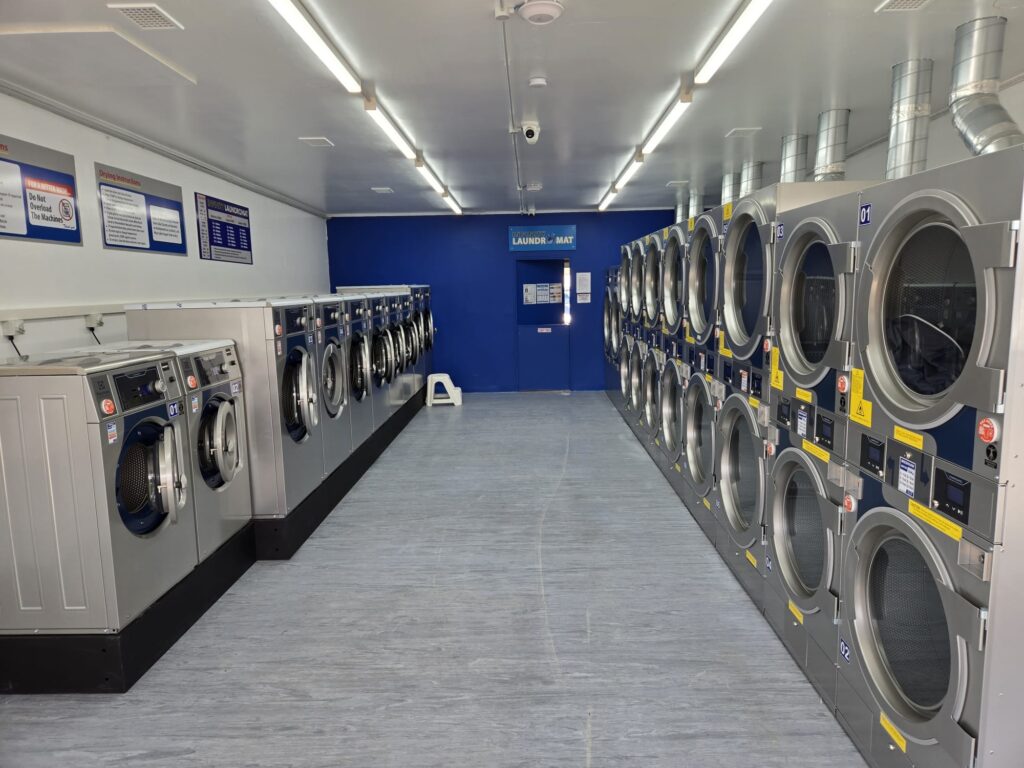
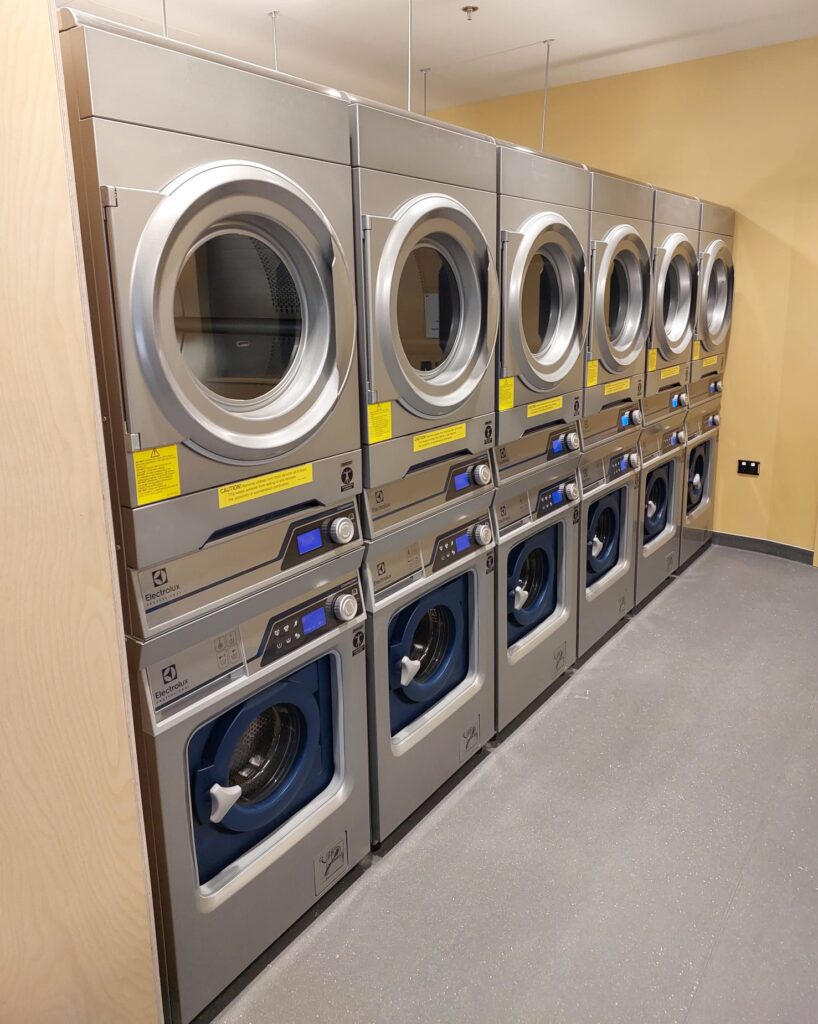
Machine dimensions influence more than floor space. Dryers requiring ducting can consume valuable wall and ceiling access, while stacked equipment can release usable floor area for production tasks.
The client information supplied by Econic Laundry Solutions notes that LG commercial stacked washer-dryer combinations remain popular where space restrictions exist. Heat pump dryers from Electrolux Professional can also remove ducting requirements while reducing energy consumption.
Equipment selection should account for loading access, unloading access and service clearance. A machine installed tightly against surrounding equipment may create maintenance difficulties that extend downtime when repairs are required.
Use Storage Space for Production, Not Overflow
Shelving can quietly consume a large percentage of the available floor area in a commercial laundry. When clean linen, chemicals, spare stock and consumables are all stored inside the production area, valuable space disappears without increasing daily throughput.
Reserve stock does not need the same access priority as laundry being processed that day. If your site has an alternative storeroom nearby, relocating bulk inventory can free enough room for additional trolley staging, folding activities or safer access around equipment.
Vertical storage can also reduce the footprint required for detergents, consumables and spare linen. The objective is not to remove storage completely. The objective is to prevent storage from competing with production space. Every square metre occupied by stock is a square metre unavailable for washing, drying, folding or linen handling activities.
Plan for Service Access and Long-Term Operation
Production interruptions often occur when maintenance access is overlooked during installation. Panels cannot be removed safely, components remain difficult to reach and service visits take longer than necessary.
Econic Laundry Solutions maintains one of New Zealand’s largest spare-parts inventories and operates service vans stocked with critical components. That approach reflects a practical reality within commercial laundries: downtime affects production immediately.
Guidance from New Zealand’s workplace ergonomics recommendations also supports designing work areas that reduce unnecessary lifting, reaching and repetitive movement. When operators can load, unload and move linen comfortably, daily production places less physical strain on staff. Why we recommend using plinths to lift the washer for improved loading / offloading and seldomly supply washers without these. Electrolux Professional single pocket dryers are built to suit ergonomics and correct loading / offloading heights.
If you are reviewing equipment options as part of a layout upgrade, explore the latest commercial laundry equipment solutions available from Econic Laundry Solutions.
Maximise the efficiency of your commercial laundry space with equipment and layout solutions from Econic Laundry Solutions and improve workflow, reduce bottlenecks and support higher daily output.
Frequently Asked Questions
1. How much clearance should remain around commercial laundry equipment?
Clearance around commercial laundry equipment depends on service requirements, loading access and safe operator movement. The manufacturer’s installation recommendations should always be followed. As a general guide, around 750 mm behind equipment is recommended to allow service technicians easy access to utilities and components.
2. Can stacked machines increase laundry output?
Stacked commercial laundry equipment increases available floor space by reducing the footprint used by washers and dryers. They are commonly used in self service laundromats where floor space is limited. In on premise laundries, single pocket equipment is often preferred because it provides better ergonomics for repeated loading and unloading.
3. What is the most common layout problem in a small laundry?
Poor linen flow is one of the most common layout issues. When staff repeatedly carry loads across the room or between poorly positioned machines, productivity decreases and labour costs increase.
4. How do I plan a commercial laundry workflow?
Commercial laundry workflow should follow a logical sequence from dirty linen collection through washing, drying, folding and clean linen storage. Reducing unnecessary handling and travel distances helps improve efficiency.
5. What equipment is best for a small commercial laundry space?
The best equipment depends on available space, production requirements and utility access. Compact washer extractors, heat pump dryers and carefully planned machine layouts can help maximise available floor space while maintaining productivity.
6. How can I improve efficiency in a commercial laundry?
Efficiency can be improved by reducing linen handling, improving equipment placement, providing adequate trolley access, organising storage effectively and selecting energy efficient commercial laundry equipment that matches daily demand.
7. Why is laundry layout important for commercial operations?
A well designed commercial laundry layout helps minimise bottlenecks, improves staff movement, supports safer working conditions and allows more loads to be processed during each shift without increasing labour.
8. Should commercial laundry equipment allow space for maintenance?
Yes. Allowing sufficient service clearance around commercial laundry equipment makes routine maintenance faster, reduces equipment downtime and helps technicians safely access critical components when repairs are required.