Your aged-care laundry needs clean linen ready throughout the day, so a replacement dryer has to keep up with the washing. A heat pump model also offers energy savings, but will those savings cover the extra purchase cost?
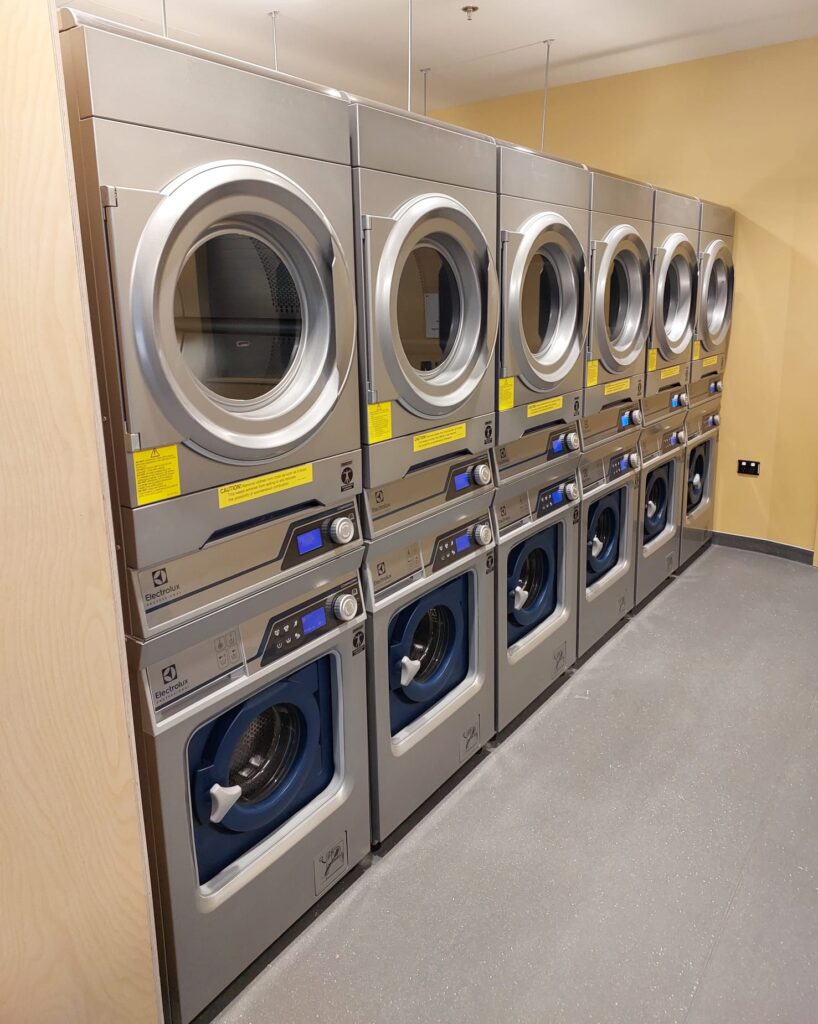
The Electrolux Professional TD6-20 heat pump dryer, available through Econic Laundry Solutions, is worth assessing against your current drying costs per load and the time available to process each load. Those figures give you a basis for comparing commercial dryers in NZ.
How the TD6-20 Reuses Heat
A dryer cools moisture-laden outlet air, condensing the water for drainage, then reheats the air using a heat pump for reuse. Recovering heat reduces the energy required to keep drying. EECA identifies heat pump technology as the most energy-efficient dryer option.
Electrolux Professional publishes 2.99 kWh and 44 minutes for the TD6-20 under specified conditions: 16.4 kg of cotton, with 50% starting moisture dried to 0%. Its separate 20 kg rating uses a different filling factor. Calculating hourly production using 20 kg and that 44-minute result overstates what the published test establishes.
Will It Process Your Aged-Care Laundry’s Workload?
In on-premise aged-care laundries, towels and residents’ clothing need separate production estimates because their loading requirements and drying programs differ. Bedding also needs room to tumble; its usable load must suit the program.
Base your production schedule on:
- Dry textile weights for each load category.
- Moisture remaining after the washer’s final spin.
- Measured drying times, including loading and unloading.
- Linen required during the busiest staffed shift.
The TD6-20 specification sets maximum starting residual moisture at 50%. Existing washer extraction therefore needs checking before replacement dryers are sized. A slower drying program does not automatically add labour if staff complete other tasks while it runs. Overtime belongs in the calculation only where production extends the shift.
Calculating Payback for Commercial Dryers in NZ
Compare the heat pump installation with a suitable conventional replacement, including electrical work and drainage. Avoided exhaust ductwork reduces the difference in installed cost, although room ventilation still needs assessment.
Annual net savings equal avoided energy expenditure minus additional maintenance or labour costs. Divide the extra installed investment by those annual savings for simple payback. Use current electricity tariffs; if replacing gas, calculate the existing dryer’s gas and electricity costs separately. Test payback again with lower annual throughput and alternative tariff assumptions.
Establish the existing operating-cost baseline using our article, Are Your Commercial Dryers Costing You More Than You Think? [HYPERLINK]
The TD6-20 is a worthwhile investment when verified savings recover the additional installed cost within your investment timeframe, provided it can meet linen demand during staffed hours.
Could the TD6-20 Deliver Long-Term Savings for Your Facility?
Find out whether heat pump technology makes financial sense for your aged-care laundry. Econic Laundry Solutions can help you evaluate the TD6-20 against your daily linen volumes, energy costs and operational requirements.
Speak to Econic Laundry Solutions about finding the right balance between upfront investment and long-term savings when choosing commercial dryers in NZ.
Frequently Asked Questions
1. Does a commercial heat pump dryer need exhaust ducting?
A commercial heat pump dryer removes water through condensation, so the TD6-20 needs a condensate drain instead of an exhaust duct. Room ventilation still requires assessment because the machine releases heat during operation.
2. How long does a commercial heat pump dryer take to pay back?
Commercial heat pump dryer payback depends on the additional installed cost divided by annual net savings. Your existing fuel costs and annual production determine the result; a manufacturer’s energy-saving percentage cannot establish a repayment period.
3. Can heat pump drying replace laundry disinfection?
A: Heat pump drying does not automatically provide a validated disinfection stage. Your aged-care laundry needs its established thermal or chemical disinfection process, with drying programs suitable for the textiles being processed.