Why Consistency Matters More Than Speed in Commercial Laundry
In commercial laundry operations, consistency often delivers greater long-term value than raw processing speed. Rewash, textile wear, downtime and production delays are more likely to result from inconsistent outcomes than slightly longer cycle times. From washing and drying performance to service support and spare-parts availability, reliable and repeatable results help facilities maintain efficiency, control costs and meet quality standards across thousands of loads.
A laundry processing linen every day depends on repeatable outcomes rather than isolated fast cycles. When sheets, towels, uniforms or resident garments leave the machine at different cleanliness or moisture levels from one load to the next, staff spend additional time correcting problems that should have been resolved during processing. That operational reality explains why high quality commercial laundry equipment is often judged by consistency over many years rather than by the shortest cycle time on a specification sheet.
Consistent Washing Reduces Rewash and Textile Wear
Load movement inside the washer determines how effectively water, chemistry and mechanical action remove soil. When load factors vary significantly or chemical dosing does not match the actual load weight, wash quality changes from cycle to cycle.
Commercial laundry operations in New Zealand often include aged care, hospitality and healthcare applications where repeated outcomes matter because multiple loads move through the same workflow every day. According to guidance published by the CDC, laundry processing relies on controlled handling and validated cleaning practices rather than assumptions about cleanliness.
Several factors directly affect washing consistency:
- Correct machine sizing for the daily kilogram requirement.
- Load-based chemical dosing.
- Stable extraction performance during high-speed spinning.
- Program selection that matches textile and soil conditions.
Drying Control Affects the Entire Production Flow
Retained moisture leaving the washer directly influences dryer performance. A load leaving one cycle with substantially more moisture than the previous load requires longer drying and creates production bottlenecks further down the line.
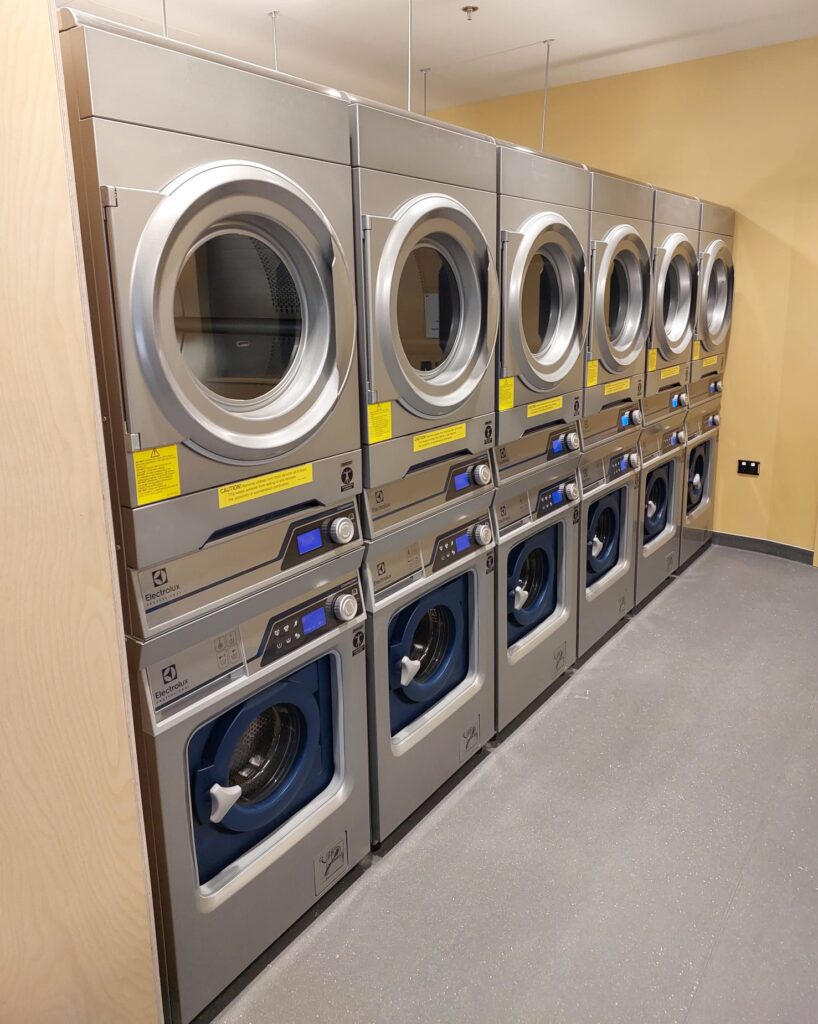
Reversing drum technology continuously redistributes textiles during drying. Large items remain separated more effectively, reducing knotting and uneven moisture retention. Moisture sensing systems then stop the cycle at a programmed moisture level rather than relying on fixed drying times. All Electrolux Professional dryers include reversing drums, which reduces dry times by around 7 minutes per cycle by constantly redistributing the wet area. Depending on operating conditions, energy savings of up to 20% may be achievable.
When your operation requires consistent quality commercial laundry results, these controls matter because ironing, folding and storage activities depend on predictable moisture content. Linen that leaves the dryer in different conditions creates additional handling and interrupts workflow continuity.
Long-Term Reliability Equals Real Operating Costs
A machine designed for 30’000 of cycles encounters thousands of operating hours, maintenance events and production demands throughout its operational life. The cost of ownership depends on what happens when a component fails, requires servicing or reaches a maintenance interval.
Econic Laundry Solutions NZ maintains one of New Zealand’s largest laundry spare-parts inventories and stocks critical service components locally. When a bearing, valve, sensor or controller requires replacement, production resumes faster when parts are immediately available rather than waiting for overseas freight.
This practical reality explains why many facilities place greater value on lifecycle support than headline cycle times. Fast equipment that sits idle awaiting repairs contributes nothing to production.
Speak with Econic Laundry Solutions about commercial laundry systems designed to deliver consistent performance, minimise downtime and support long-term operational efficiency.
Frequently Asked Questions
1. What creates consistent washing results across thousands of loads?
Consistent washing results come from stable load factors, accurate chemical dosing that adjusts according to the loaded weight, appropriate wash programmes and controlled extraction performance throughout the machine’s life.
2. How does drying technology affect laundry quality?
Drying technology affects laundry quality through moisture management, airflow design and textile movement inside the drum, helping achieve consistent moisture levels while protecting textiles.
3. Why do spare parts matter when selecting laundry equipment?
Spare parts availability reduces downtime because repairs can begin immediately when components are locally available, allowing equipment to return to operation faster.
4. What should I compare when evaluating consistent quality commercial laundry systems?
Compare cycle life, service support, spare parts availability, extraction performance, load based chemical dosing, energy efficiency and long term reliability before making a decision.
5. Why is consistency more important than speed in commercial laundry?
Consistent laundry results reduce rewash, improve linen quality, minimise downtime and create a smoother production workflow, making them more valuable than simply achieving faster cycle times.
6. How can commercial laundry equipment reduce operating costs?
Commercial laundry equipment reduces operating costs by improving energy efficiency, reducing water usage, lowering textile wear, decreasing rewash rates and minimising unexpected maintenance.
7. Which industries benefit most from consistent commercial laundry performance?
Healthcare, aged care, hotels, hospitality, laundromats and commercial laundry facilities all benefit from consistent washing and drying results that support quality standards and operational efficiency.
8. How often should commercial laundry equipment be serviced?
Commercial laundry equipment should be serviced according to the manufacturer’s maintenance schedule. Preventative servicing helps maximise equipment life, maintain consistent performance and reduce costly breakdowns.